CIHW
Integrative Lifestyle: Bridging Evidence, Tradition,
and Everyday Health
Integrative Lifestyle (IL) is gaining growing attention worldwide. Drawing from the expanding field of integrative medicine, the term describes a healthy way of living informed by modern science and traditional wisdom. First articulated by the author in an earlier publication, this concept has continued to evolve through research and exploration into a practical framework to help individuals integrate these principles into everyday life. This article outlines why Integrative Lifestyle is relevant today and introduces its core idea and framework
Why Integrative Lifestyle Matters Today?
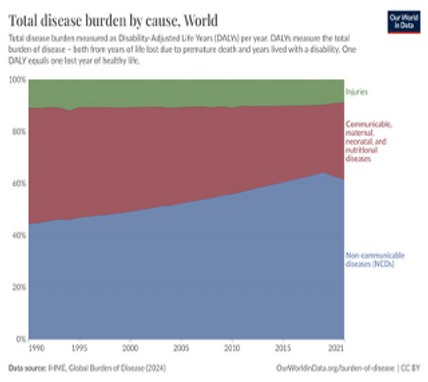
Non-communicable diseases (NCDs) that include conditions such as cardiovascular diseases (heart attacks and strokes), diabetes, cancers, chronic respiratory diseases and related disorders - contribute to the largest share of disease burden globally. The disease burden is measured using a metric ‘Disability-Adjusted Life Years (DALYs)’ which refers to years of healthy life lost due to premature death, illness, or disability. Nearly 60% of the global burden of disease (GBD) is now attributable to NCDs, and this share continues to rise worldwide. Of the 43 million deaths every year due to NCDs, 18 million occur prematurely, mostly in low and middle income countries. Recent estimates indicate that about 63% of all deaths in India are due to NCDs, reflecting a major epidemiological shift from communicable to chronic conditions over the past decades. Approximately one-fourth of these deaths occur between ages 30 and 70, reflecting a substantial loss during the most productive years of life.
Evidence points to three broad categories of risk factors for NCDs: (1) behavioural factors such as unhealthy diets, physical inactivity, tobacco use, and harmful alcohol consumption; (2) metabolic factors including raised blood pressure, high blood glucose, overweight, and abnormal blood lipids; and (3) environmental risk factors such as air pollution and socio-economic factors such as rapid urbanization, globalization of unhealthy lifestyles.
A key public health strategy for preventing and controlling NCDs is a life-course approach to reducing these risks. Lifestyle interventions that modify underlying risk factors are among the most cost-effective tools available, helping avert high out-of-pocket healthcare expenses that increasingly push populations in low- and middle-income countries toward poverty.
Lifestyle medicine offers evidence-based recommendations on optimal nutrition, physical activity, stress management, restorative sleep, social connection, and avoidance of risky substances—together addressing up to 80% of chronic disease risk. However, translating this evidence into sustained behaviour change requires addressing key barriers and enabling effective facilitators. Studies highlight multiple barriers, including personal factors (limited knowledge, motivation, and self-discipline), interpersonal influences (family and peer attitudes), and broader cultural, socio-economic, and policy constraints. Studies also show that positive perceptions of physical and mental health are associated with higher adoption of healthy lifestyle behaviours. A growing body of literature highlights the importance of community engagement and cultural competence, particularly alignment with indigenous practices, in enabling uptake. Interventions divorced from local culture and context have been shown to be neither sustainable nor scalable. Addressing cultural relevance is therefore essential to long-term public health solutions.
Against this backdrop, Integrative Lifestyle assumes heightened significance and relevance. Aligned with the principles of integrative medicine, it offers a framework to systematically and scientifically synergize modern and traditional lifestyle approaches. Health and wellbeing span physical, mental, and spiritual dimensions, and the Integrative Lifestyle approach seeks to address these needs holistically.
The Integrative Lifestyle Concept and Framework
The Integrative Lifestyle framework recognizes wellbeing as an emergent outcome of interactions among physical, mental, spiritual, social, and contextual domains. It integrates evidence from Lifestyle Medicine and Behavioural Sciences with the experiential knowledge of traditional systems such as Ayurveda, Yoga, and Meditation. The proposed framework translates theory into practice through four interconnected dimensions—Body, Mind, Heart, and Environment.
Body
Lifestyle medicine offers strong evidence here: whole, minimally processed diets support metabolic health; regular physical activity improves cardiovascular and muscular function; restorative sleep regulates hormonal balance and recovery; effective stress regulation enhances neuroendocrine and immune function; strong social connections support mental health, adherence, and longevity; and avoidance of harmful substances reduces long-term disease risk.
Increasingly, digital health tools and wearables are helping translate these recommendations into daily practice by providing feedback on physical activity, sleep patterns, heart rate, and other physiological markers—enhancing awareness, self-monitoring, and motivation.
Traditional systems add depth and personalisation. Ayurveda highlights individual constitution (prakriti) and imbalance (vikriti), the role of digestion (agni), metabolic efficiency, and alignment with daily and seasonal rhythms. Yoga contributes postures and breath practices that support stability, circulation, and autonomic balance. When used thoughtfully, modern tools and wearables can complement these traditions by supporting reflection, rhythm, and self-regulation.
Mind
The Mind dimension relates to attention, beliefs, stress reactivity, and self-regulation. Modern behavioural science shows that much of daily behaviour is automatic and shaped by habit loops, cognitive load, and mental fatigue—making healthy choices difficult to sustain.
Alongside contemplative practices, digital tools can offer cues and feedback that support habit formation; however, without mental clarity and intentionality, data alone rarely leads to sustained change. Yoga and meditation traditions offer tools to steady and refine the mind. Practices that cultivate focus, awareness, and mental clarity reduce distraction and stress reactivity. Emerging evidence shows that meditation improves emotional balance, resilience, and consistency in healthy behaviours.
Heart
In this framework, Heart refers not to the physiological organ but to the inner self. It is regarded as source of feelings, the centre of intention, purpose, values, and meaning. It addresses the deeper “why” behind health behaviours: what matters most, what motivates change, and what gives direction to life.
Across cultures, a strong sense of purpose is associated with greater resilience, better mental wellbeing, and sustained engagement in healthy habits. Heartfulness practices, which emphasise heart-centred meditation and self-regulation, are increasingly being examined as structured interventions to support emotional balance, stress regulation, and purposeful living. Emerging evidence suggests benefits across domains such as perceived wellbeing, stress reduction, emotional resilience, improved sleep quality and overall quality of life, particularly when practiced consistently at individual and community levels.
Environment
The Environment dimension includes external factors that shape behaviour, often more powerfully than intention alone, and include physical spaces, social relationships, digital exposure, and cultural norms. Behavioural science shows that people follow what is easiest and most reinforced around them.
Supportive environments make healthy choices natural and sustainable. Traditional systems recognised this long ago through emphasis on routines, rhythms, supportive spaces, and simplicity. Integrative Lifestyle treats environment including the digital environment as an active lever for change.
Thus, the framework integrates four interconnected dimensions of Body, Mind, Heart, and Environment to optimise health and wellbeing.

Conclusion
The rising burden of non-communicable diseases, persistent gaps in behaviour change, and the limits of one-size-fits-all interventions call for a more integrated approach to health and wellbeing. Integrative Lifestyle responds to this need by bringing together evidence from modern science with the lived wisdom of traditional systems, grounded in cultural context and everyday realities. By viewing health through the interconnected dimensions of Body, Mind, Heart, and Environment, Integrative Lifestyle moves beyond fragmented recommendations toward a coherent, person-centred framework.
As interest in prevention, wellbeing, and whole-person health continues to grow, Integrative Lifestyle offers a promising direction for individuals, communities, and health systems alike. It invites a shift from managing disease to cultivating and promoting health.
References:
-
Jayanna, K. (2023). Integrative approach to lifestyle management: Implications for public health research & practice in the context of SDG-3. Journal of Ayurveda and Integrative Medicine. https://www.sciencedirect.com/science/article/pii/S0975947623001122
-
World Health Organization. (2025). Noncommunicable diseases: Key facts. https://www.who.int/news-room/fact-sheets/detail/noncommunicable-diseases?
-
Subramaniam M, et al. (2022) Barriers and facilitators for adopting a healthy lifestyle in a multi-ethnic population: A qualitative study. PLOS ONE 17(11) https://journals.plos.org/plosone/article?id=10.1371/journal.pone.0277106
-
Antonio, M. C. K., Chung-Do, J. J., & Braun, K. L. (2015). Systematic Review of Interventions Focusing on Indigenous Pre-Adolescent and Adolescent Healthy Lifestyle Changes. AlterNative: An International Journal of Indigenous Peoples https://doi.org/10.1177/117718011501100205
-
TEDx talk by the author on Integrative Lifestyle - https://www.youtube.com/watch?v=N6pquaOaU9w